Erosion Control Solutions for Gresham Landscaping and Construction Projects
Allwood Recyclers supplies hog fuel and landscape products for homeowners, property managers, and landscaping companies in Gresham, OR, looking to protect exposed ground and manage erosion. From residential improvements in Rockwood to landscaping projects around Gresham Butte, choosing appropriate erosion control materials can help prevent soil loss, reduce muddy conditions, and protect completed landscaping.
Gresham’s mix of established neighborhoods, developing properties, and sloped terrain creates different challenges for controlling runoff. Seasonal rainfall can wash loose soil downhill, damage newly planted areas, and carry sediment toward drainage systems. Effective erosion control measures help keep soil where it belongs while supporting long-term landscape stability.
Since 1995, Allwood Recyclers has supplied landscape materials to residential and commercial customers throughout the region. Our Fairview location serves Gresham customers who need practical ground-cover materials and supplies for outdoor projects.
Match the Right Erosion Control Materials to Your Property
A flat residential yard in Centennial requires a different approach than a sloped property near Kelly Creek. Understanding how water moves across the landscape helps determine which materials and installation methods will be most effective.
Protecting Bare Ground with Hog Fuel and Mulch
Exposed soil is especially vulnerable during heavy rainfall. Hog fuel provides coarse ground coverage that can reduce direct rain impact, help manage muddy surfaces, and protect soil in suitable applications. It is commonly used around pathways, outdoor work areas, and other locations requiring durable ground cover.
For newly planted landscapes, seeding and mulch work together to encourage vegetation establishment. Mulch protects the surface while helping maintain the moisture needed for germination. As plants develop, their root systems contribute to long-term soil stability.
Managing Runoff with Straw Wattles and Filter Socks
Where water travels across disturbed ground, erosion control products can help slow surface flow and capture sediment. A straw wattle is typically installed along a slope’s contour to interrupt runoff, while a filter sock can be positioned to help prevent sediment from leaving a designated work area.
These materials are particularly relevant to grading and construction projects where soil remains exposed before landscaping is completed. They require appropriate placement, anchoring, inspection, and maintenance to remain effective.
Stabilizing Slopes with Erosion Blankets
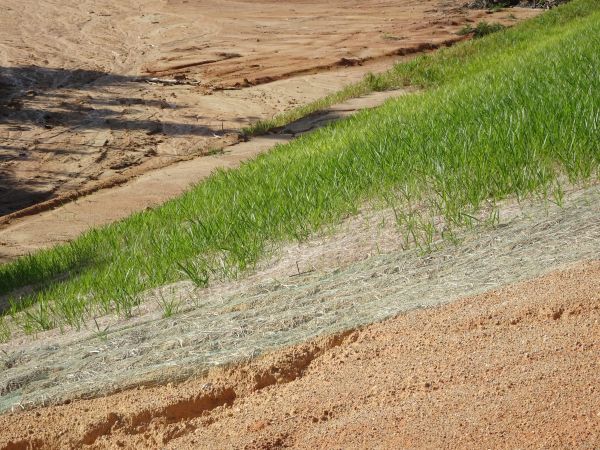
An erosion blanket protects disturbed soil while grass or other vegetation becomes established. Depending on the product, blankets may be made from straw, coconut fiber, or other biodegradable materials.
For sloped properties around Gresham Butte and Powell Valley, erosion blankets may help reduce surface soil movement when installed according to site conditions and manufacturer specifications. Steeper or unstable slopes may require additional engineering or drainage improvements.
Understanding Gresham’s Erosion Prevention Requirements
Erosion control is particularly important when landscaping involves excavation, grading, or construction. Gresham maintains a Stormwater Management Manual that includes erosion prevention and sediment control guidance for applicable development projects.
Property owners and contractors should evaluate drainage patterns, soil exposure, nearby storm drains, and applicable permitting requirements before beginning work. In areas around Kelly Creek, keeping sediment out of drainage pathways can be an important consideration.
Appropriate measures may include temporary ground cover, inlet protection, sediment barriers, or permanent vegetation. The right approach depends on the project rather than a single material being suitable for every situation.
Landscape Supply Experience Serving Gresham Since 1995
Allwood Recyclers has spent more than three decades recycling wood waste and yard debris while supplying useful landscape products. Our screened hog fuel is produced from selectively chosen local wood materials and is used for applications including erosion control, pathways, and mud management.
Whether you’re maintaining a commercial landscape near Gresham Arts Plaza, improving a residential yard around the Tsuru Island Japanese Garden area, or working on an established property near the Gresham History Museum, careful material selection helps achieve more practical results.
Our selection of bark, compost, soil blends, rock, and related landscaping supplies supports a variety of residential and commercial outdoor improvements.
Find Erosion Control Materials for Your Gresham Project
When exposed soil, runoff, or muddy ground becomes a problem, addressing it before the next period of heavy rainfall can help prevent additional damage.
Contact Allwood Recyclers at (503) 667-5497 or visit our landscape supply location at 22800 NE Marine Drive, Fairview, OR 97024. We serve Gresham, OR, and surrounding communities with landscape products for property maintenance, improvements, and erosion prevention projects.
Customer Reviews and Experiences
Here’s what customers are saying about working with Allwood Recyclers.


Frequently Asked Questions About Erosion Control Materials in Gresham, OR
Sloped properties in Gresham, OR, often need erosion control measures that address both rainfall impact and downhill water movement. The best solution depends on the slope’s steepness, soil composition, existing vegetation, and how much runoff passes through the area.
For residential properties around Gresham Butte, erosion blankets can help protect newly disturbed soil while vegetation becomes established. Straw wattles may be installed across slopes to slow surface water and capture sediment before it travels farther downhill. Seeding and mulch can also help stabilize exposed ground when conditions support healthy plant growth.
Hog fuel may be appropriate for pathways, relatively level surfaces, and selected ground-cover applications. However, coarse wood materials can shift during concentrated runoff and may not provide sufficient protection on steep slopes.
Before selecting materials, identify where water enters and leaves the property. Persistent erosion may indicate an underlying drainage problem that ground cover alone cannot resolve.
For steep, unstable, or heavily eroded areas, professional evaluation may be necessary to determine whether additional drainage improvements or engineered stabilization measures are appropriate.
The cost of erosion control materials in Gresham, OR, depends on the product, quantity, coverage area, and whether additional installation supplies are needed.
Hog fuel and bulk mulch are typically priced by volume, making them practical options for covering larger areas. Straw wattles and filter socks may be sold individually or by length, while erosion blankets are commonly priced according to roll dimensions and material composition.
For example, a homeowner improving a small yard in Centennial may need only a modest quantity of mulch or ground cover. A landscape contractor stabilizing a larger disturbed area near Powell Valley could require multiple products, including blankets, sediment barriers, and seed.
Delivery costs, site accessibility, labor, and installation complexity can also affect the total project expense.
When estimating quantities, measure the actual coverage area and account for the recommended installation depth or overlap. Ordering based only on property size can lead to unnecessary expenses or insufficient materials.
Allwood Recyclers offers landscape supplies, including screened hog fuel, for customers in the Gresham area. Contact the company to ask about current product pricing, quantities, availability, and pickup or delivery options before purchasing.
Erosion prevention and sediment control measures may be required for construction and land-disturbing activities in Gresham, OR. The specific requirements depend on the project’s scope, location, permits, and applicable city and state regulations.
Gresham’s Stormwater Management Manual includes an Erosion Control Manual, and the city’s Public Works Standards address construction entrances, sediment barriers, ground cover, mulching, and inlet protection.
For example, a contractor performing grading work near Rockwood may need to establish erosion controls before disturbing the soil. Measures could include protecting storm drains, covering stockpiled material, and preventing sediment from reaching streets or neighboring properties.
A smaller residential landscaping project may have different requirements, depending on the extent of excavation and whether the work affects drainage or protected areas.
Contractors should review the current city requirements and approved project plans before purchasing materials. Certain projects may also fall under Oregon Department of Environmental Quality stormwater permitting rules.
Proper installation matters just as much as material selection. Erosion prevention systems generally require ongoing inspections, particularly after rainfall, to ensure that barriers remain functional and exposed areas stay protected.
The best time to install erosion control materials in Gresham, OR, is before exposed soil experiences significant runoff. Because western Oregon receives much of its rainfall during the cooler months, preparing vulnerable areas before fall and winter can reduce the likelihood of erosion damage.
For homeowners in Powell Valley planning to reseed a lawn, late summer or early fall may provide favorable conditions for certain grass varieties, depending on irrigation availability and soil temperatures. Applying appropriate mulch can help retain moisture and protect seeds during establishment.
Construction and grading projects require a different approach. Temporary erosion control measures should be installed according to the project’s erosion prevention plan and maintained throughout periods of soil disturbance.
Property managers should also inspect drainage areas, exposed slopes, and landscaping after heavy storms. Displaced mulch, sediment accumulation, and newly formed runoff channels can indicate that existing measures need attention.
If erosion is already occurring, waiting for warmer weather may allow additional soil loss. Temporary stabilization can sometimes be implemented immediately, with permanent landscaping completed when growing conditions improve.
The most effective schedule considers both weather conditions and the specific purpose of the erosion control products.